
Proxy vs VPN - which one is best for your use case
Get a better understanding of the differences between various proxies and a VPN and which one is best for your use case
Valentin Ghita
Technical Writer, Marketing, Research
Mihalcea Romeo
Co-Founder, CTO
Choosing the Right Tool: Our Connectivity Services Explained
We understand that the variety of services we offer can be confusing. To help you make an informed choice, we’ve broken down each service, how it works, and why you might choose one over the other. While all these tools serve the primary purpose of changing your IP address, their underlying technology and use cases differ significantly.
HTTP Proxies
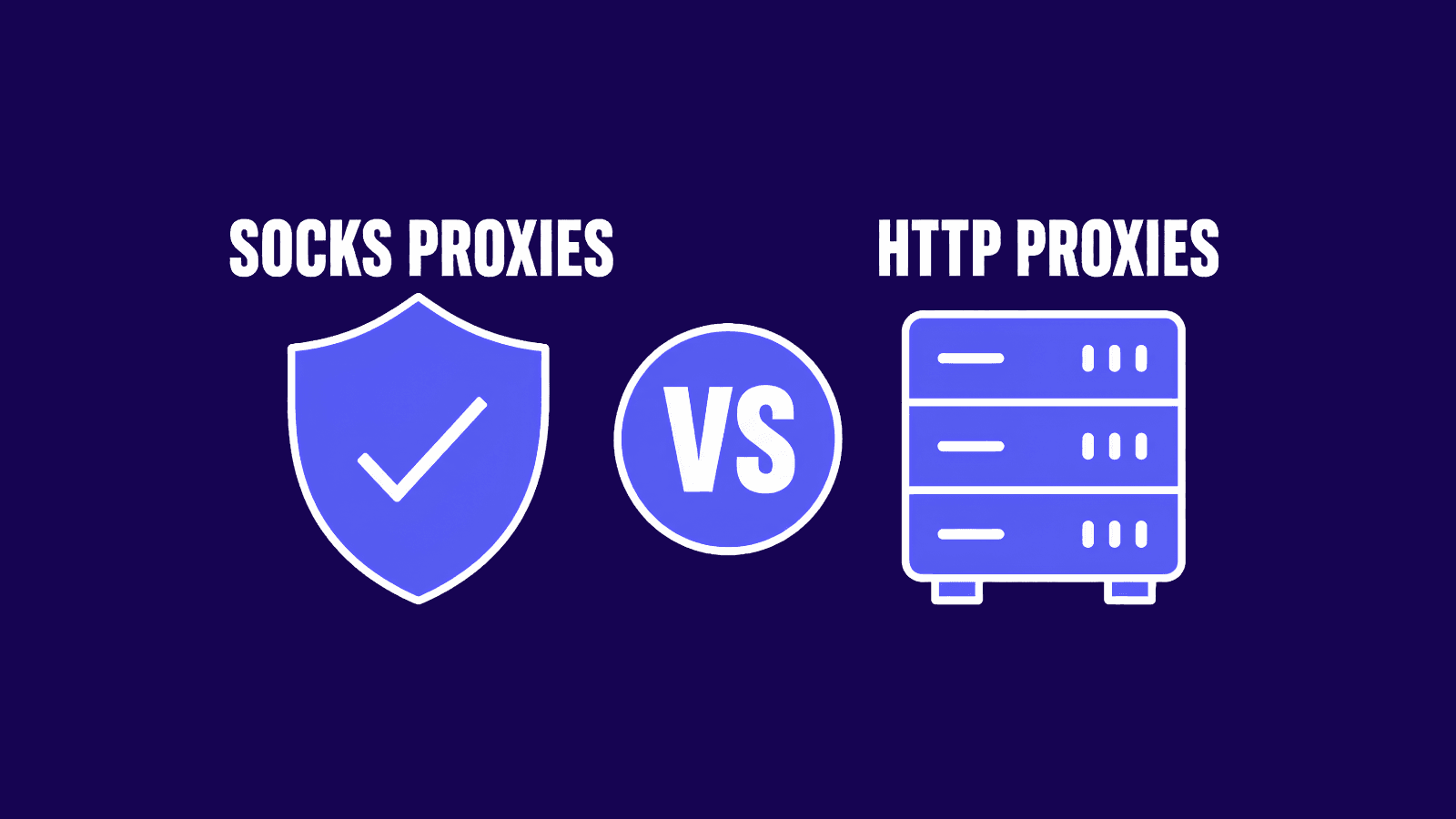
The HTTP Proxy is our most popular service, widely utilized for web scraping and data crawling. Its primary advantage is scalability; you can maintain multiple parallel connections, each utilizing a unique proxy. HTTP proxies are connection-based, making them incredibly easy to rotate and manage at high speeds. HTTP Proxies come in many types in our service offering, mostly Datacenter proxies or ISP proxies.
SOCKS5 Proxies
SOCKS5 proxies are very similar to HTTP proxies but offer greater versatility. While slightly more expensive, they support the UDP protocol in addition to TCP. This makes SOCKS5 the superior choice for applications that require low latency or specific data streams, such as online gaming, VoIP, or streaming services. If you need support for a wider range of internet protocols beyond standard web traffic, SOCKS5 is the way to go. Similar with the HTTP proxies, our SOCKS5 come in many types in our service offering, mostly Datacenter SOCKS5 or ISP SOCKS5.
Shadowsocks
Shadowsocks is essentially a SOCKS5 proxy wrapped in an extra layer of encryption. While all our services hide your IP, Shadowsocks is specifically built to prioritize privacy. Because it encrypts your traffic, it requires more CPU power on both ends, which may result in slightly lower speeds compared to a standard proxy. We recommend a Shadowsocks Proxy when you need a balance of privacy and the ability to bypass basic network censorship.
Trojan Proxies
Trojan is our premier recommendation for users in high-censorship environments. It is designed to be extremely stealthy by masking its traffic as standard HTTPS (TLS/SSL) on port 443. To an outside observer or a firewall, your connection looks like ordinary web browsing. If you are trying to bypass a "Great Firewall" or sophisticated deep-packet inspection (DPI), Trojan is your most reliable tool.
VPN (Virtual Private Network)
A VPN creates a system-wide tunnel, meaning every application on your device—not just your browser—accesses the internet through the encrypted connection. While highly secure, standard VPN protocols can be easier for ISPs to identify by analyzing packet sizes and patterns.
Best for: Accessing geo-restricted content while traveling, securing public Wi-Fi, or connecting remote servers (like databases) securely.
VPN vs proxy - which one to pick?
In short, use a proxy where you want to be fast at switching connections, think of automated environments, crawlers and bots. Proxies are connection based which makes them suitable at isolating the proxied application also.
Use a VPN when you need encryption and privacy since the connection will always be encrypted and data moved up and down the pipe is hard to decipher by the vpn server owners or in tranzit by your ISP or other nodes. A downside of the VPNs in general is that they require an application that initiates the connection and does the encryption/decryption of data, also the tunnel it creates is usually system-wide but can be altered by rules. Since the tunnel created takes some time to be up or down, VPNs are not suitable in scenarios where fast or multiple connections are ideal.
Amnezia VPN
Standard VPNs are often "visible" to network administrators; they know you are using a VPN, even if they can't see your data. Amnezia VPN (based on the WireGuard protocol) solves this by using "obfuscation." It adds noise and alters packet sizes to hide the fact that you are using a VPN at all. It provides the system-wide coverage of a VPN with the anti-censorship stealth of a specialised proxy.
Standard VPN vs. Amnezia VPN: The Battle Against Detection
While both provide encryption, the way they handle your data "metadata" is what sets them apart.
- The Problem with Standard VPNs: Even though a standard VPN encrypts your data so no one can see what you are doing, the connection itself has a "fingerprint." Because of specific packet sizes and handshake patterns, an ISP or a streaming service (like Netflix) can easily see that you are using a VPN. In many cases, this is enough for them to block your connection entirely.
- The Amnezia Advantage: Amnezia is built for "stealth." It uses obfuscation techniques to wrap your VPN traffic in a layer of "randomness." By adding junk data (noise) and varying the sizes of the data packets, it mimics the appearance of regular, unidentifiable web traffic. This makes it significantly harder for sophisticated firewalls to flag and block your connection.
Comparison Summary
Regardless of your needs, we have the infrastructure to support you. Pick the service that fits your workflow, or reach out to our support team if you need further guidance.
Since the editor is based on a recursive tree model, similar to an HTML document, you can create complex nested structures, like tables:
| Service | Best For | Privacy Level | Scope |
|---|---|---|---|
| HTTP Proxy | Web Scraping / Crawling | Basic | App-specific |
| SOCKS5 | Gaming / Streaming | Basic | App-specific |
| Shadowsocks | Bypassing Censorship | High (Encrypted) | App-specific |
| Trojan | Heavy Firewalls / Stealth | Very High | App-specific |
| Standard VPN | General Security / Geo-blocks | High | System-wide |
| Amnezia VPN | Maximum Stealth + Security | Elite | System-wide |

Buy Backconnect Proxies
Rotating IPs on every request. Scale scraping and automation without manual IP management.