
ISP Proxies vs Datacenter Proxies: Comparison Guide
Not all proxies do the same job. Some are built for speed, scale, and large request volumes. Others are built for stable sessions and traffic that looks more like a real user. That is the core difference between datacenter proxies and ISP proxies.
On the surface, they seem similar. Both hide your real IP and route traffic through another server. In practice, websites treat them differently, and that affects block rates, session stability, and cost. This guide explains exactly what they are, their differences, where each one works best, and how to choose the right option for your use case
Valentin Ghita
Technical Writer, Marketing, Research
Mihalcea Romeo
Co-Founder, CTO
What are datacenter proxies?
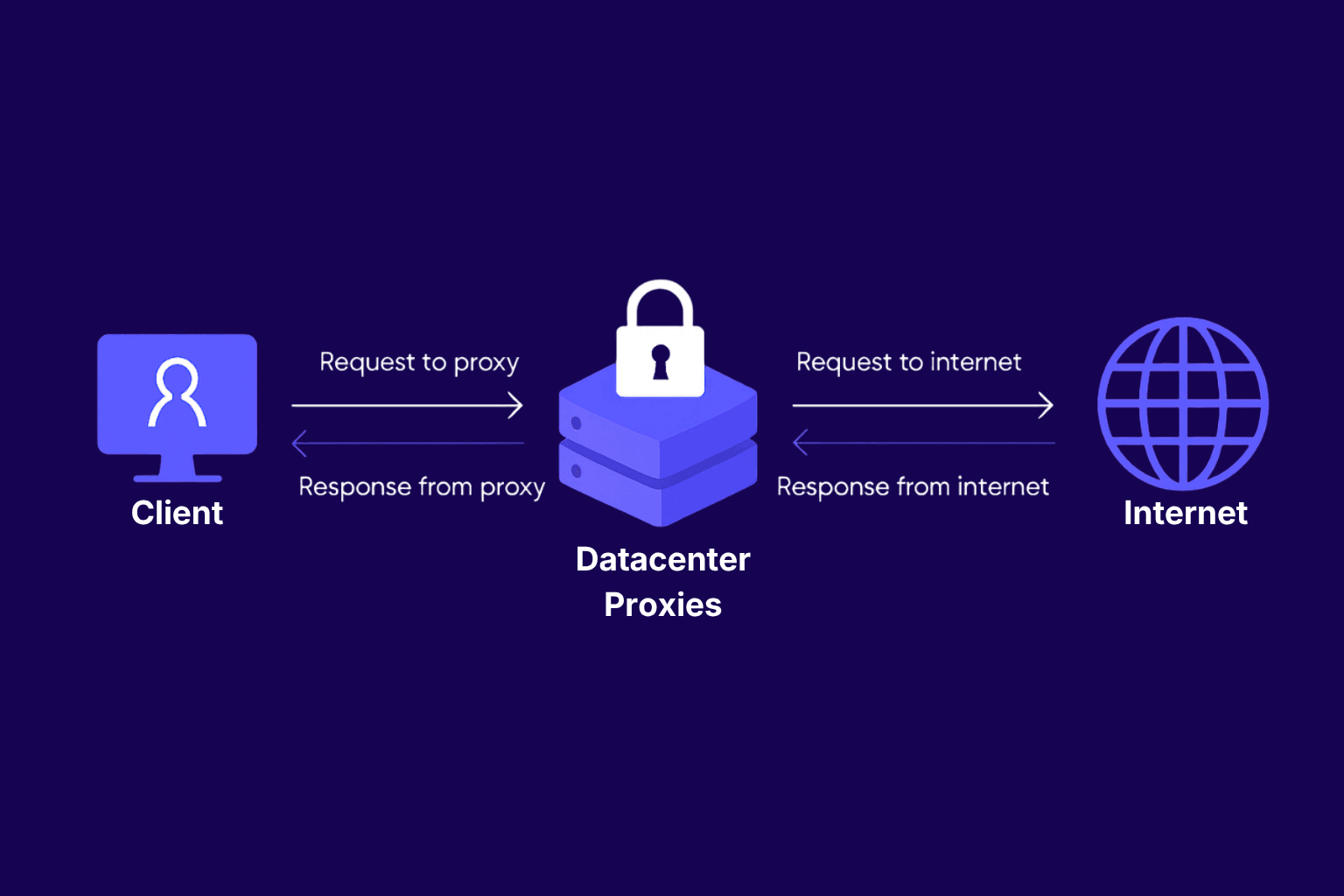
Datacenter proxies are IP addresses that come from servers in datacenters and not via home internet connections. They come from hosting infrastructure built for server traffic, then get used as proxy endpoints.
The primary advantage is their very practical nature in terms of scalability. Data centers are typically quick, inexpensive, and scalable as your business needs increase. Providers will provide huge IPs, quick replacement, and IP rotation, making them ideal for heavy usage.
On the other hand, datacenter proxies are also reliable when it comes to usage. Because they operate within managed infrastructures, they have reliable speeds and uptime.
Now, they also have a tradeoff, and that tradeoff is visibility. Websites can often tell that a datacenter IP comes from hosting infrastructure instead of a household connection. That does not make these proxies ineffective. It just means they are easier to identify, and on stricter sites, easier to challenge. On simpler targets, that may not matter much. On protected ones, it often does.

Buy ISP Proxies
Dedicated IPs from real ISPs. Residential trust, datacenter speed, unlimited bandwidth.
What are ISP proxies?
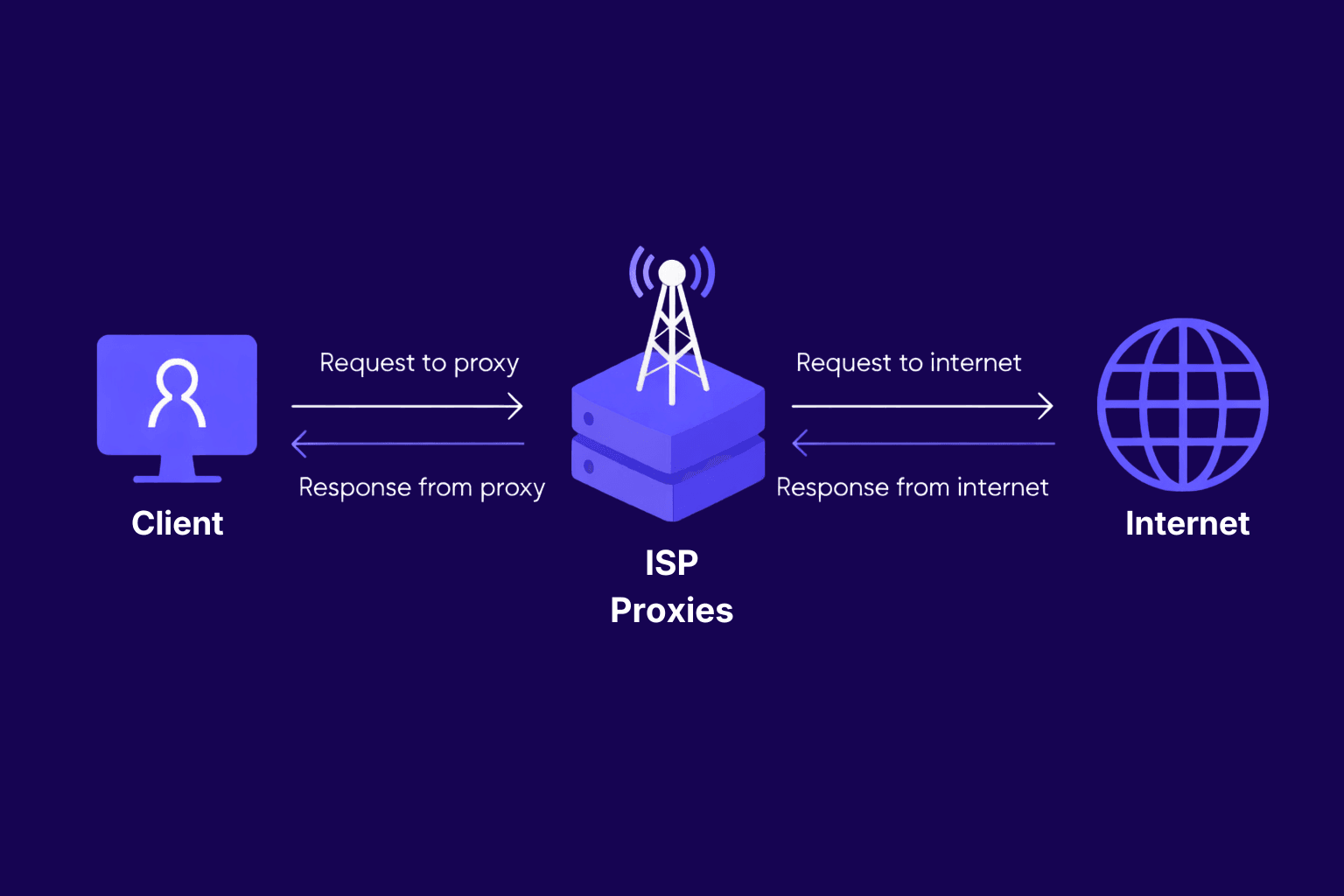
ISP proxies use IP addresses assigned by internet service providers, even though the proxies themselves still run on servers. That gives them a useful middle ground: the performance of hosted infrastructure with an IP profile that looks more like a normal user connection. You will also see them called static residential proxies.
That difference matters because websites often trust ISP-issued IPs more than datacenter IPs. In practice, that can mean fewer blocks, fewer captchas, and fewer interruptions on sites that pay close attention to IP reputation.
Their main strength is stability. ISP proxies are a strong fit for logins, account activity, and other multi-step actions where keeping the same IP helps the session stay intact.
The tradeoff is cost. ISP proxies are usually more expensive and harder to scale than datacenter proxies because these IPs are more limited and more valuable. That makes them the better choice when trust and session stability matter enough to justify the higher price.
Key Differences Between Datacenter and ISP Proxies
A datacenter proxy and an ISP proxy will look almost the same at first sight. They both mask your IP address and route the request via other server. What differs between these types of proxies is the way a website reads that IP address and how that affects performance, trust, and cost.
A datacenter proxy is always preferable in case you need fast access, scalability and affordability. An ISP proxy can be better in case you need a more reliable IP address, extended sessions, and reduced chances of interruptions even on strict sites.
The table below makes the differences easier to compare side by side.
| Factor | Datacenter Proxies | ISP Proxies | What This Means for You |
|---|---|---|---|
| IP source | Come from datacenters or cloud servers | Use IPs assigned by internet service providers | ISP proxies usually look more like regular user traffic |
| Website trust | More likely to be flagged as server traffic | More likely to be treated as normal ISP traffic | ISP proxies often face less friction on stricter sites |
| Speed | Usually very fast | Usually fast, but not chosen mainly for speed | Datacenter proxies are often better for high-volume work |
| Block risk | Higher on protected targets | Lower on many protected targets | ISP proxies are often safer when trust matters more |
| Session length | Good, but often used with rotation | Strong for long, stable sessions | ISP proxies work better for logins and multi-step actions |
| Rotation style | Commonly rotated more often | Commonly kept static for longer | Datacenter proxies suit broad scraping, while ISP proxies suit session-based tasks |
| Pool size | Usually larger | Usually smaller | Datacenter proxies are easier to scale in bulk |
| Cost | Usually lower | Usually higher | Datacenter proxies are more budget-friendly for heavy usage |
| Best fit | Scraping, SERP tracking, public data collection | Account management, protected targets, long sessions | The right option depends on whether you need scale or trust |
| Main drawback | Easier to detect on stricter sites | More expensive and less scalable | Paying more for ISP proxies only makes sense when the extra trust improves results |
When Datacenter Proxies Are the Better Choice
Datacenter proxies make sense when the job is mainly about coverage, speed, and keeping costs under control. They are a strong fit for workloads that send a high number of requests across many pages or targets, especially when the site is not strict about datacenter traffic. They also work well when you are testing a setup, scaling a process, or trying to get the most output from a fixed budget. Below are the most common ways datacenter proxies are used.
Use Cases
Large-scale web scraping. Pulling large amounts of public data from sites with light to moderate protections is one of the most common uses for datacenter proxies.
SERP monitoring. Tracking rankings across large keyword sets, locations, or devices is a natural fit for datacenter proxies when the target does not place heavy restrictions on datacenter traffic.
Price tracking. Monitoring product prices across large catalogs or multiple stores works well with datacenter proxies when you need broad coverage and frequent checks.
Market research. Gathering public competitor data, product listings, and category trends is a strong use case for datacenter proxies when you need to move across many pages efficiently.
Ad verification. Checking how ads appear across campaigns, pages, or regions can be a good fit for datacenter proxies when the target does not require a highly trusted IP profile.
When ISP proxies are the better choice
ISP proxies make more sense when the quality of the connection matters more than the number of requests. They are a better fit for tasks where the session needs to stay steady, the target is more sensitive, or the traffic needs to look more like a real user from start to finish. In such situations, the extra costs incurred would be worthwhile since the process remains constant and there is no wastage of cash when the IPs fail to comply with rigorous scrutiny. Now, let’s take a look at the most common ways ISP proxies are used.
Use Cases
Account management. Managing accounts over time is one of the clearest use cases for ISP proxies because many platforms expect a stable session and may react badly to frequent IP changes.
Automation. ISP proxies work well for automating tasks that should run from a single clean session, such as account login, navigation through the dashboard, form filling with multiple teps, and completing cart or checkout flows on stricter websites.
E-commerce. On protected e-commerce sites, ISP proxies can make monitoring products, listings, or categories much smoother. Because the traffic looks more like a regular user, they are less likely to run into the blocks or checks that datacenter proxies often trigger.
Sneaker and ticketing. Accessing high-demand product or ticket pages is a common use case for ISP proxies because these environments often apply stricter checks and reward a more trusted IP profile.
Protected scraping. Collecting data from sites that react badly to datacenter traffic is a good fit for ISP proxies when staying under the radar matters more than scraping at maximum scale.
Can you use ISP proxies and datacenter proxies together?
Yes, and in many cases that is the best setup.
A mixed strategy lets you match proxy cost to task sensitivity. You can use datacenter proxies for wide, high-volume work such as discovery, public page collection, keyword checks, and broad monitoring. Then you can reserve ISP proxies for the parts of the workflow that need more trust, such as logins, account actions, cart flows, protected pages, or long sessions.
This approach gives you better efficiency without sacrificing reliability where it counts. It also keeps your proxy budget under control. Instead of paying ISP rates for everything, you pay for them only where they produce a clear return.
Basically, that is often the smartest way businesses scale: use datacenter proxies as the workhorse and ISP proxies as the precision layer.
Wrap Up
Now, you should know that ISP proxies and datacenter proxies solve different problems. Datacenter proxies are usually better for speed, scale, and lower-cost volume. ISP proxies are usually better for trusted identity, stable sessions, and stricter targets.
The right choice will always depend on the task you have, not the label. If you don't know which one is better for your use case or have any questions about proxies in general, don't hesitate to contact our support team and they will help you with whatever problem you've got.