
ISP Proxy Statistics (2026): 50+ Data Points on Market Growth, Bot Traffic, and Scraping Law
The numbers that actually define ISP proxy economics in 2026: market size, bot and AI traffic, IP infrastructure, commercial use cases, and scraping law. 48 primary-source statistics aggregated from 34 named regulators, anti-bot vendors, market research firms, and court filings. Refreshed every quarter.
Valentin Ghita
Technical Writer, Marketing, Research
Mihalcea Romeo
Co-Founder, CTO
TL;DR: The short version
- Automated traffic hit 51% of all web requests in 2024, passing humans for the first time in a decade (Imperva 2025 Bad Bot Report).
- Bad-bot traffic reached 37% of web requests in 2024, up from 32% in 2023, the sixth straight yearly increase (Imperva 2025 Bad Bot Report).
- Only 2.8% of websites tested in 2025 were fully protected against bots, down from 8.4% in 2024 (DataDome 2025 Global Bot Security Report).
- 39% of 4 billion analyzed malicious sessions came from residential IPs; 78% evaded IP reputation feeds (GreyNoise / IPInfo, April 2026).
- Large-block IPv4 transfer prices fell under $21 per IP in May 2025, a near 10-year low (IPv4.Global transfer data).
- Credential stuffing accounts for a median 19% of daily authentication attempts at SSO providers (Verizon 2025 DBIR).
- Residential proxy server market forecast to reach $148M by 2030 at 3.98% CAGR; the surrounding web scraping market is forecast to $2.23B by 2031 at 13.78% CAGR (Mordor Intelligence).
- 90% of investment firms used alternative data in 2025, up from 62% in 2023 (Lowenstein Sandler 2025 Alternative Data Report).
- AI crawlers reached ~8.7% of all HTML request traffic in 2025; AI-driven traffic grew 187% year-over-year (Cloudflare Radar; HUMAN Security).
- National data-protection authorities in Europe issued €1.15B in GDPR fines during 2025; only 1.3% of DPA complaints end in a fine (EDPB; noyb analysis).
This article is published by anonymous-proxies.net, which sells ISP proxies among other products. All statistics below come from named third-party primary sources (regulators, market research firms, academic studies, court filings, and security vendors). No proprietary data from anonymous-proxies.net is cited.

Buy ISP Proxies
Dedicated IPs from real ISPs. Residential trust, datacenter speed, unlimited bandwidth.
In 2024, automated traffic accounted for 51% of all web requests, the first time bots outran humans in at least a decade. Bad bots alone hit 37% of traffic, up from 32% the year before (Imperva 2025 Bad Bot Report). Only 2.8% of tested websites are fully protected against them, down from 8.4% in 2024 (DataDome 2025 Global Bot Security Report).
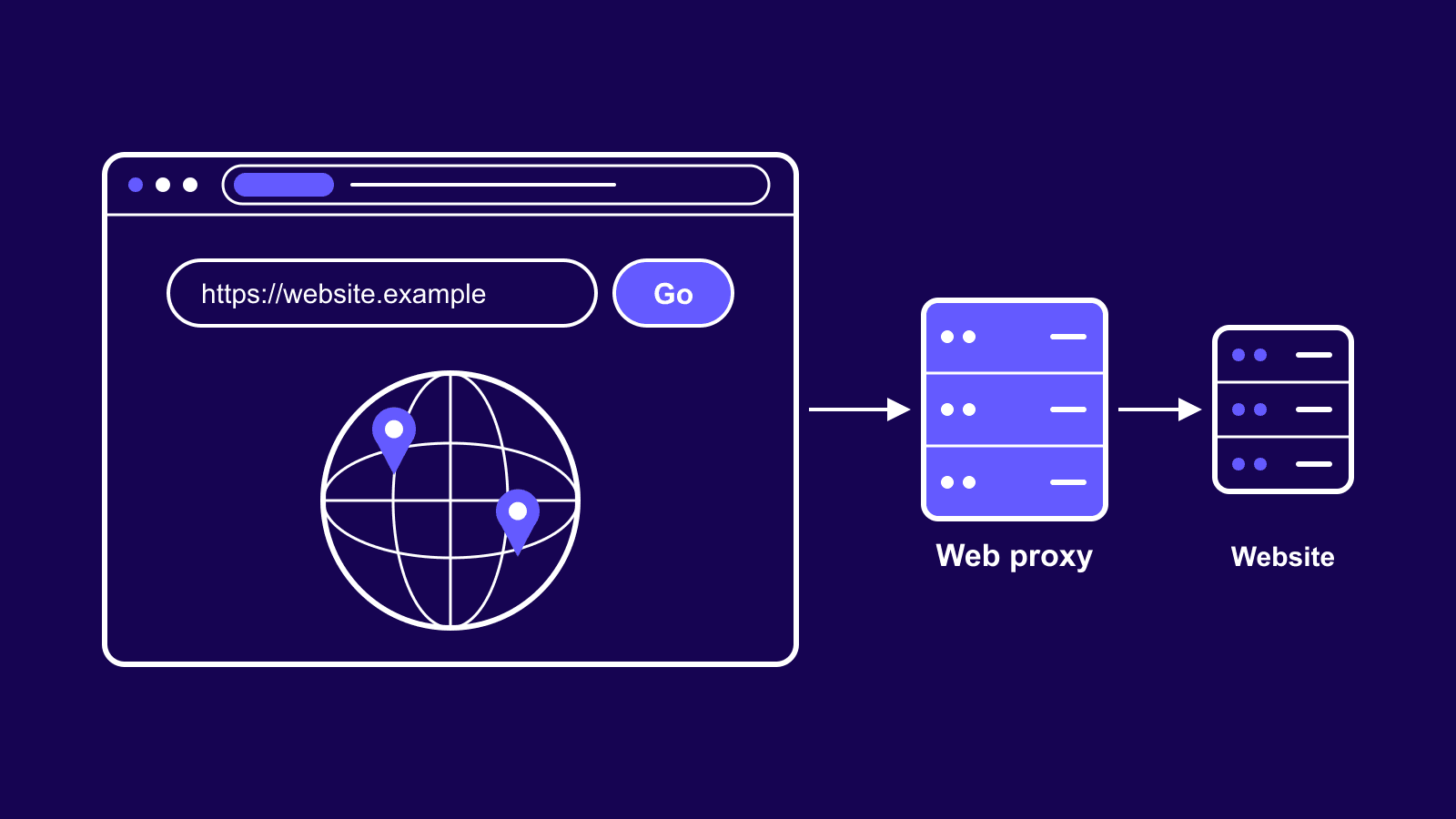
An ISP proxy is a server-hosted IP address that originates from a consumer Internet Service Provider's Autonomous System Number, not from a datacenter. From a target website's perspective, the traffic looks like it comes from an ordinary home broadband connection while running on server hardware for consistent speed and static sessions. ISP proxies are also called static residential proxies.
Why ISP proxies specifically? Because datacenter IPs no longer pass modern bot-detection stacks at acceptable rates, and rotating residential pools introduce session volatility that breaks workflows like long-running cart fills, logged-in SERP scrapes, and multi-step account verification. ISP proxies split the difference: residential-grade IP reputation with datacenter-grade speed and session stability. The surrounding markets (web scraping, alternative data, bot security) have compounded accordingly.
We pulled data from Imperva, Cloudflare, Akamai, HUMAN Security, DataDome, Grand View Research, Mordor Intelligence, the EDPB, IAB, ANA, Verizon DBIR, OECD/EUIPO, ITU, and roughly two dozen other primary sources. Every number below traces to a named study, regulator, or court filing. Anything we couldn't verify got dropped.
Market size and growth
Proxy-vendor revenue is the smallest number in this section, and the most misleading one. The real market for ISP-class IP infrastructure isn't the billing line on a proxy order. It's the alternative-data, web-scraping, and AI-training industries that buy the IP layer as an input. Those adjacent markets are compounding at double-digit rates. The pure-play "residential proxy" software line item only looks modest next to them because analyst firms draw narrower boundaries.
A decade ago, the concept of a residential proxy server didn't appear as a discrete category in any mainstream market-sizing report. Mordor Intelligence now tracks it as its own segment: $122M in 2025, growing to $148M by 2030 at 3.98% CAGR. Mobile proxies are tracked separately and growing more than twice as fast (8.34% CAGR through 2030), driven by 5G rollout and the same bot-detection pressure that inflated ISP-proxy demand. The downstream markets tell the actual growth story, though. Web scraping is forecast to more than double by 2031, and Data-as-a-Service, the category that consumes most scraped rows, is forecast to reach $76.8 billion by 2030 at 28.1% CAGR (Grand View Research).
Residential proxy market sizing also varies an order of magnitude across firms. Mordor measures vendor software revenue only. Other reports bundle bandwidth resale, hosting, and adjacent DaaS spend and arrive at figures ten times larger. This article uses Mordor because its scope is the cleanest. For total demand-side sizing, the Grand View DaaS and alternative-data figures are more defensible anchors.
The most reliable signal isn't any single market-size figure in isolation. It's the direction and rate of every adjacent forecast: bot security +20.2% CAGR through 2030, alternative data +63.4% through 2030, SEO software +13.5% through 2030, web scraping +13.8% through 2031. Every one of those markets buys the same underlying infrastructure. ISP proxies are the IP layer for all of them.
Metric | Value | Source |
|---|---|---|
Residential proxy server market, 2025 | $122.0M | Mordor Intelligence, Residential Proxy Server Market 2025–2030 |
Residential proxy server market forecast, 2030 | $148.3M (3.98% CAGR) | Mordor Intelligence |
Mobile proxy server market, 2025 → 2030 | $747M → $1.12B (8.34% CAGR) | Mordor Intelligence, Mobile Proxy Server Market 2025–2030 |
Web scraping market, 2025 → 2031 | $1.03B → $2.23B (13.78% CAGR) | Mordor Intelligence, Web Scraping Market 2025–2030 |
Data-as-a-Service market, 2024 → 2030 | $17.4B → $76.8B (28.1% CAGR) | Grand View Research, Data as a Service Market |
Bot security market, 2023 → 2030 | $732M → $2.59B (20.2% CAGR) | Grand View Research, Bot Security Market |
SEO software market, 2025 → 2030 | $84.9B → $154.6B (13.5% CAGR) | Fortune Business Insights, SEO Software Market |
VPN market, 2025 → 2031 | $61.3B → $142.1B (15.05% CAGR) | Mordor Intelligence, VPN Market |
The bot economy
Two things define the modern web: humans are the minority of users, and the defense layer is losing ground.
The bad-bot trend line has climbed for six consecutive years. In 2013, Imperva measured bad bots at 23.6% of web traffic. Through the mid-2010s the figure drifted down as commercial bot mitigation matured. Starting around 2020, as AI capabilities cascaded into bot tooling, the line reversed and hasn't looked back. The 2024 jump from 32% to 37% was the largest single-year increase in the dataset. The 2025 Imperva Bad Bot Report attributes the acceleration to generative AI lowering the skill floor for writing request-level automation: attackers who previously couldn't afford a developer can now prompt one.
The defense side lost ground in parallel. DataDome's 2025 Global Bot Security Report tested more than 16,900 websites across 22 industries and found that only 2.8% were fully protected, down from 8.4% a year earlier. 61% of domains failed to detect a single test bot. That doesn't mean bot mitigation stopped working. It means the bot population got harder to detect faster than most sites upgraded.
The target surface shifted too. 44% of advanced bot traffic now targets APIs rather than web applications (Imperva 2025). That mirrors what attackers actually want: session-level credential stuffing, account takeover, and inventory scraping all work best against structured JSON endpoints that don't render the bot-detection JavaScript served on HTML pages. F5 Labs' 2025 Advanced Persistent Bots Report found credential stuffing now reaches 33.5% of all login traffic in the technology vertical and around 24% of mobile-API logins in eCommerce and entertainment. Verizon's 2025 DBIR puts the median rate of credential-stuffing activity across SSO providers at 19% of daily authentication attempts. Roughly one in five logins at identity-provider scale is machine-driven.
For anyone buying IP infrastructure, the implication is specific: datacenter egress is now detectable on the order of hours on any site with modern protection. Residential-grade IPs remain the dominant workaround, and the detection-evasion arms race is the primary driver of unit economics across the sector.
Methodology note. Imperva's 51% automated-traffic figure is measured against sites under its protection (skewed to enterprise targets attackers pursue). Cloudflare Radar's ~30% bot share in 2025 is measured across the full anycast network, which carries vast volumes of CDN-cached human traffic and drags the ratio down. Both numbers are correct at their stated scope. Don't conflate them.
Metric | Value | Source |
|---|---|---|
Share of web traffic that was automated, 2024 | 51% | Imperva 2025 Bad Bot Report |
Share of web traffic from bad bots, 2024 | 37% (up from 32% in 2023) | Imperva 2025 Bad Bot Report |
Year-over-year growth in account takeover (ATO) attacks, 2024 | +40% | Imperva 2025 Bad Bot Report |
Share of advanced-bot traffic targeting APIs, 2024 | 44% | Imperva 2025 Bad Bot Report |
Travel-industry traffic that is bad bots, 2024 | 48% | Imperva 2025 Bad Bot Report |
Cloudflare-mitigated share of all traffic, 2025 | 6.2% | Cloudflare Radar 2025 Year in Review |
Median daily SSO auth attempts that are credential stuffing | 19% | Verizon 2025 DBIR |
Share of breaches starting from compromised credentials, 2024 | 22% | Verizon 2025 DBIR |
IP infrastructure and detection
Every block at the edge comes down to one of two signals: what your IP looks like, and what your browser looks like. In 2025–2026 the IP side moved more than the browser side, and it moved in ways that matter specifically for ISP-proxy economics.
The biggest dataset of the year came from a joint GreyNoise and IPInfo analysis reported in April 2026. Over three months, the teams examined 4 billion edge-attack sessions. 39% of those sessions came from residential IPs, exactly the profile ISP proxies and consumer-backed residential pools produce. 78% of the residential-IP sessions evaded conventional IP reputation feeds entirely. And 89.7% of the malicious residential IPs were active for less than a month before rotating out of the pool. The takeaway: static IP blocklists, the backbone of anti-bot defense for a decade, no longer carry the signal they used to. Detection has to come from somewhere else now, usually behavior over time.
The IPv4 market collapsed in parallel. Large-block (/16+) transfer prices fell under $21 per IP in May 2025, the lowest point in roughly a decade according to IPv4.Global transfer data. 8,062 IPv4 transfers were recorded globally in 2025, near an all-time high in transfer volume. The drop partly reflects IPv6 catching up. Google reported US IPv6 share crossed 50% in February 2025, and France reached around 86% in February 2026. It also reflects large incumbents liquidating hoarded blocks as enterprise demand migrated to IPv6 for new workloads. Monthly lease rates for IPv4 now sit at roughly $0.40–$0.50 per IP. Those numbers set the floor on ISP-proxy unit economics, because an ISP proxy is, structurally, an IPv4 lease on a reputable ASN with a reverse DNS pointer to a consumer ISP. For a practical head-to-head on how ISP-class and datacenter-class IPs fare under live detection, see ISP proxies vs datacenter proxies.
The browser side hasn't changed much. Desktop browser fingerprints stay unique across populations. EFF's Panopticlick reported 83.6% uniqueness in the original 2010 study, and subsequent large-n research has confirmed the method still discriminates well against the modern browser ecosystem. Where there is real movement: CAPTCHAs. ETH Zurich researchers published 96–100% solve rates against legacy reCAPTCHA v2 using custom computer vision. Roundtable AI's 2025 benchmark of frontier LLM agents on modern CAPTCHAs showed Claude Sonnet 4.5 solving 60%, Gemini 2.5 Pro 56%, and GPT-5 28% of challenges. CAPTCHAs are still slower to solve than traffic is to route, but not reliably enough to form a line of defense on their own.
The practical implication for anyone provisioning IP infrastructure in 2026: the IP layer still matters, but it matters differently. Reputation feeds are functionally defeated for residential traffic. The question on the IP side is whether the IP came from a consumer ISP's ASN at all. That's what ISP proxies are built to present.
Metric | Value | Source |
|---|---|---|
Share of 4B analyzed malicious sessions from residential IPs | 39% | GreyNoise / IPInfo residential proxy analysis, April 2026 |
Residential-proxy sessions that evaded IP reputation feeds | 78% | GreyNoise / IPInfo, April 2026 |
Residential IPs active under one month before rotating out | 89.7% | GreyNoise / IPInfo, April 2026 |
IPv4 transfer price, /16+ blocks, May 2025 | under $21/IP (~10-year low) | IPv4.Global transfer data |
IPv4 transfers recorded globally, 2025 | 8,062 (near record high) | IPv4.Global |
Global IPv6 share of Google-user traffic, early 2025 | 43–47% | Google IPv6 Statistics |
US IPv6 share crossed 50% | February 2025 | Google IPv6 Statistics |
CAPTCHA solve rate (custom CV, legacy reCAPTCHA v2) | 96–100% | ETH Zurich, "Breaking reCAPTCHAv2" (2024) |
Business use cases: price, SEO, ads, and travel
ISP proxies get bought because a specific commercial workflow needs consistent, residential-looking egress. Five workflows dominate the buyer mix: retail price monitoring, SERP and SEO rank tracking, ad verification and programmatic waste auditing, travel fare aggregation, and marketplace brand protection. All five share one property: IP infrastructure is not a cost center but a direct input to revenue.
Retail pricing is the largest single driver. Global e-commerce hit $6.42 trillion in 2025, 20.5% of all retail, per eMarketer. EU enterprises with e-sales rose to 23.59% of all EU enterprises in 2024 per Eurostat. The country range is wide (14.57% in Romania, 43.03% in Lithuania), which itself creates cross-border pricing arbitrage. The economic lever for pricing teams is McKinsey's long-running finding that a 1% price improvement yields roughly 8.7% operating-profit lift. At that elasticity, a continuous competitor-price scan pays for itself in weeks. Every serious price monitoring operation needs residential-grade egress to survive retail bot defenses. Repeated datacenter hits on major retailers get silently poisoned with wrong prices rather than blocked outright, which is worse than blocked.
The ad side is bigger in absolute dollars. US digital ad revenue reached $294.6 billion in 2025 (IAB/PwC), with programmatic growing +20.5% year-over-year to $162.4 billion. The ANA's Q2 2025 Programmatic Transparency Benchmark reports $26.8 billion of that programmatic spend leaks to inefficiency and waste, up 34% in two years. Invalid traffic runs at 20.64% globally across 105.7 billion impressions measured by Fraudlogix; Pixalate benchmarks in Q4 2025 put web IVT at 23%, mobile-app IVT at 36%, and CTV IVT at 21% globally. The gap between what advertisers pay and what reaches real consumers is the revenue case for ad verification. Ad verification, by definition, needs residential IPs in the right geos to see what campaigns look like when rendered for real users. Fraudulent ad-tech stacks cloak aggressively for datacenter IPs.
Travel is the most bot-targeted single vertical. Imperva found 48% of travel-industry traffic in 2024 was bad bots, the highest share of any sector measured. Skift Research reported that the top four online travel agencies control 96% of the sector's $58 billion in revenue. When four players funnel an entire category, metasearch and fare-aggregation teams need high-fidelity IP infrastructure to keep rates fresh across dozens of booking engines that routinely rate-limit or block non-consumer IPs.
SEO sits quietly alongside these. The SEO software market is projected at $84.9 billion in 2025 (Fortune Business Insights), growing to $154.6 billion by 2030 at 13.5% CAGR. Rank tracking and SERP monitoring at scale need geo-distributed residential egress for the same reason as ad verification: results have to look exactly like what a real user sees, not a personalized cache served to a scraping farm. This is the workload pattern behind SEO proxies deployments at agency scale.
Metric | Value | Source |
|---|---|---|
Global retail e-commerce, 2025 | $6.42T (20.5% of all retail) | eMarketer, Worldwide Retail Ecommerce Forecast 2025 |
EU enterprises with e-sales, 2024 | 23.59% (14.57% Romania, 43.03% Lithuania) | Eurostat, E-commerce Statistics for Enterprises |
Operating profit lift from a 1% price improvement | ~8.7% | McKinsey, Pricing Excellence in Retail Marketplaces |
US digital ad revenue, 2025 | $294.6B | IAB / PwC, Internet Advertising Revenue Report 2025 |
US programmatic ad spend growth, 2025 | +20.5% to $162.4B | IAB / PwC 2025 |
Programmatic media value lost to inefficiency, Q2 2025 | $26.8B (waste up 34% in two years) | ANA Q2 2025 Programmatic Transparency Benchmark |
Global invalid traffic rate, 2025 | 20.64% across 105.7B impressions | Fraudlogix Ad Fraud Benchmarks 2026 |
Top four OTAs' share of the online travel sector's $58B revenue, 2024 | 96% | Skift Research, 10 Biggest OTAs 2025 |
Alternative data and AI training
The fastest-growing customer segment for residential IP infrastructure isn't marketing. It's investment research and AI training. Hedge funds and LLM labs are the two buyers whose budgets can cover the unit economics of high-quality residential egress, and both segments expanded sharply in 2025.
Alternative data adoption among investment firms jumped from 62% in 2023 to 90% in 2025 according to the Lowenstein Sandler 2025 Alternative Data Report, which surveys private equity, hedge fund, and venture investors annually. 89% of those firms plan to grow their alt-data budgets; two-thirds already spend over $1 million per year on external data, and the largest firms run $5 million+ programs across dozens of vendors. Grand View Research projects the underlying market at $135.7 billion by 2030, a 63.4% CAGR from $11.65 billion in 2024. If that forecast lands within even half of its trajectory, alternative data will be one of the fastest-growing data categories in the world. Coalition Greenwich's 2025 survey of 56 US, UK, and European buy-side firms corroborates: 63% plan to increase alt-data outlays over the next 12 months.
Every dollar of that spend ultimately buys data collection. The data comes from the web. The web comes through IPs. And the type of IP that works for this kind of low-profile, long-session, geo-specific collection is residential-class, specifically the ISP-proxy category when sessions also need to be static.
AI training is the other half of the story, and it has grown at rates the industry has no real benchmark for. Cloudflare measured AI crawlers at roughly 8.7% of all HTML request traffic in 2025 (Googlebot 4.5%, other AI bots around 4.2%), with user-driven AI crawls growing 15× year-over-year. HUMAN Security's 2026 State of AI Traffic benchmark reports AI-driven traffic grew 187% and agentic-browser traffic grew 7,851% YoY. Akamai measured AI bot activity up 300%, with 25 billion AI-bot requests hitting commerce sites in July and August 2025 alone. DoubleVerify attributes 86% of the General Invalid Traffic (GIVT) increase in 2025 to AI crawlers. The bulk of the ad-fraud metric's movement is scrapers, not classical fraud.
The two customer shapes are opposites. Alt-data collection needs long-lived, quiet sessions that look like ordinary retail users. That's the profile an ISP-class IP provides. AI-training crawlers are volume-dominant and mostly identifiable; many are now blocked at the CDN layer by default when operators declare themselves. The first workflow is where ISP-proxy demand compounds. The second is where the bot-detection industry is upgrading fastest, and where the arms race will be most visible to end users in 2026.
Metric | Value | Source |
|---|---|---|
Alternative-data market, 2024 → 2030 | $11.65B → $135.7B (63.4% CAGR) | Grand View Research, Alternative Data Market |
Investment firms using alternative data, 2025 | 90% (up from 62% in 2023) | Lowenstein Sandler 2025 Alternative Data Report |
Advisers planning to grow alt-data budgets, 2025 | 89% | Lowenstein Sandler 2025 Alternative Data Report |
Buy-side firms planning to increase alt-data outlays | 63% (n=56 US/UK/Europe) | Coalition Greenwich, Alternative Data 2025 |
AI-crawler share of HTML request traffic, 2025 | ~8.7% | Cloudflare Radar 2025 Year in Review |
AI-driven traffic YoY growth, 2025 | +187% | HUMAN Security, 2026 State of AI Traffic & Cyberthreat Benchmarks |
AI bot activity YoY growth, 2025 | +300% (25B+ AI-bot requests to commerce, Jul–Aug 2025) | Akamai, AI Botnet Report 2025 |
Share of GIVT increase attributed to AI crawlers | +86% | DoubleVerify, AI Crawlers and GIVT |
Scraping law and enforcement
Scraping law moved more in 2024–2025 than in any prior two-year stretch.
US courts narrowed the scope of unauthorized access. Van Buren v. United States (593 U.S. ___, 2021) read the Computer Fraud and Abuse Act's "without authorization" language narrowly, limiting CFAA liability to cases where the user enters systems they are not permitted to enter at all. Purpose-based theories of liability (scraping a site for one reason when the terms permit another) did not survive. The Ninth Circuit followed with the final hiQ Labs v. LinkedIn reaffirmation in 2022, confirming that automated access to publicly available data likely does not violate the CFAA. The hiQ case settled in December 2022 for $500,000, a permanent injunction, and data destruction. The commercial outcome was narrow, but the underlying holding on public-data scraping survived, and it's the load-bearing precedent for US-law scraping analysis.
European enforcement scaled materially. National data-protection authorities collectively issued €1,145,760,374 in GDPR fines during 2025. Ireland led with €530.77 million, largely driven by an April 2025 TikTok ruling on China data transfers. France's CNIL issued €486.85 million across 84 fines; Germany €48.12 million across 499 fines; Spain €45.20 million across 324 fines. Cumulative GDPR fines since 2018 exceed €4.2 billion across 6,680+ decisions per the CMS Enforcement Tracker. The noyb counter-signal is worth reading carefully: only 1.3% of complaints brought to EU DPAs end in a fine. The totals grab headlines. The base rate of enforcement activity per complaint is much lower than the totals imply.
New rules took effect alongside the enforcement activity. The EU Data Act applies from 12 September 2025 and requires fair, reasonable, and non-discriminatory data access, with free user access to connected-product data becoming mandatory from 2026. The EU AI Act's Article 53 requires general-purpose AI providers to respect DSM Directive Article 4(3) machine-readable opt-outs from text and data mining, and to publish a "sufficiently detailed summary" of training data including main scraped domains. Territorial scope attaches to placement on the EU market regardless of where the mining physically occurs, which effectively exports EU training-data compliance to any vendor that wants to sell a model in Europe.
California moved as well. The California Privacy Protection Agency's largest fine to date is $1.35 million against Tractor Supply Co. in September 2025, for opt-out and Global Privacy Control non-compliance. The California AG separately settled with Disney for $2.75 million and Healthline for $1.55 million earlier in the year. Compared to Europe the absolute dollar values are smaller, but the agency has publicly telegraphed that CCPA statutory penalty caps rose in January 2025 and that GPC compliance is now the priority enforcement vector.
OECD/EUIPO's Mapping Global Trade in Fakes 2025 pegged counterfeit trade at $467 billion, or 2.3% of global imports. The data is based on 2020–2021 customs seizures, the most recent complete dataset, so the absolute number is lagging by roughly four years. The composition (postal channels ascendant; China and Hong Kong still the primary source countries) is more current than the dollar total.
For any team doing scraping at commercial scale, the practical 2026 picture is narrower than the headline totals suggest: US public-data scraping remains defensible post-hiQ, EU pipelines need an explicit AI Act and DSM Directive compliance track, and the GDPR penalty tail is real but heavily concentrated in a small number of flagship rulings.
Item | Value / Status | Source |
|---|---|---|
Total GDPR fines issued by national DPAs, 2025 | €1,145,760,374 | EDPB, Fines and Decisions |
Cumulative GDPR fines since 2018 | ~€4.2B across 6,680+ decisions | CMS, GDPR Enforcement Tracker |
Share of DPA complaints that end in a fine | 1.3% | noyb, Data Protection Day analysis |
Largest CPPA fine to date, Sept 2025 | $1.35M (Tractor Supply Co.) | California Privacy Protection Agency |
CFAA "without authorization" scope | Narrowed to gated access (Van Buren v. United States, 2021) | US Supreme Court opinion |
Public-data scraping precedent | 9th Cir. reaffirmed (hiQ Labs v. LinkedIn, 2022); settled $500K | Court record |
EU Data Act applicability | From 12 September 2025 | European Commission |
Global trade in counterfeit goods (2021 data) | $467B (2.3% of global imports); EU $117B | OECD / EUIPO, Mapping Global Trade in Fakes 2025 |
Frequently Asked Questions
What is an ISP proxy?
An ISP proxy is a server-hosted IP address that originates from a consumer Internet Service Provider's Autonomous System Number (ASN) rather than a datacenter. From a target website's perspective, the traffic looks like it comes from an ordinary home broadband connection, not a hosting provider. ISP proxies are also called static residential proxies.
How do ISP proxies differ from regular residential proxies?
Residential proxies route traffic through real consumer devices, so the IP belongs to an actual home and rotates whenever the household reconnects. ISP proxies are hosted on server hardware with IPs leased from consumer ISPs, giving static sessions and stable latency. ISP proxies sacrifice some of the one-to-one trust of a true residential IP in exchange for session stability and speed.
How do ISP proxies differ from datacenter proxies?
Datacenter proxies originate from hosting-provider ASNs such as AWS, Google Cloud, or Hetzner, and are routinely flagged by modern bot-detection stacks. ISP proxies originate from consumer-ISP ASNs such as Comcast, Verizon, BT, or Deutsche Telekom, and pass IP reputation checks at rates close to those of true residential IPs. Recent data: 78% of residential-IP sessions evaded IP reputation feeds in a three-month analysis of 4 billion edge-attack sessions (GreyNoise / IPInfo, April 2026).
What are ISP proxies used for?
The five largest commercial workloads in 2026 are retail price monitoring, SERP and SEO rank tracking, ad verification and programmatic waste auditing, travel fare aggregation, and alternative-data collection for hedge funds. Each workload needs consistent, residential-looking egress that rotating residential pools cannot provide.
Are ISP proxies legal?
Using an ISP proxy to access publicly available information is generally not a violation of the US Computer Fraud and Abuse Act, per the Ninth Circuit's reaffirmation of hiQ Labs v. LinkedIn in 2022 and the Supreme Court's Van Buren v. United States (2021). EU-based collection requires additional compliance with GDPR, the EU Data Act (applicable from 12 September 2025), and the AI Act's text-and-data-mining provisions for any training-data use.
How big is the ISP proxy market in 2026?
Mordor Intelligence sizes the residential proxy server market (which includes ISP proxies) at $122M in 2025, forecast to $148M by 2030 at 3.98% CAGR. The surrounding web scraping market is forecast at $2.23B by 2031 at 13.78% CAGR. Adjacent demand markets compound much faster: alternative data is forecast at $135.7B by 2030 at 63.4% CAGR (Grand View Research).
Why is demand for ISP proxies growing?
Datacenter IPs are now detectable on most modern sites within hours, and rotating residential IPs introduce session volatility that breaks logged-in workflows. ISP proxies sit between the two: residential-grade IP reputation with static, datacenter-grade session stability. The workloads that most need that middle ground (price monitoring, ad verification, alternative data) are also the ones compounding fastest.
How much does an ISP proxy cost?
Retail pricing varies by provider and volume, but underlying costs have compressed sharply. Large-block IPv4 transfer prices fell under $21 per IP in May 2025 (IPv4.Global), and monthly lease rates sit near $0.40 to $0.50 per IP. Retail ISP proxy pricing has tracked those underlying costs down through 2025 and into 2026.
Summary mega-table: 18 most important ISP proxy statistics for 2026
# | Metric | Value | Source |
|---|---|---|---|
1 | Automated share of all web traffic, 2024 | 51% | Imperva 2025 Bad Bot Report |
2 | Bad-bot share of all web traffic, 2024 | 37% | Imperva 2025 Bad Bot Report |
3 | Websites fully protected against bots, 2025 | 2.8% (down from 8.4% in 2024) | DataDome 2025 Global Bot Security Report |
4 | Share of 4B malicious sessions from residential IPs | 39% | GreyNoise / IPInfo, April 2026 |
5 | Residential proxy sessions evading IP reputation | 78% | GreyNoise / IPInfo, April 2026 |
6 | IPv4 large-block transfer price, May 2025 | <$21/IP (10-year low) | IPv4.Global |
7 | Global IPv6 share of Google-user traffic, early 2025 | 43–47% | Google IPv6 Statistics |
8 | Median daily SSO logins that are credential stuffing | 19% | Verizon 2025 DBIR |
9 | ATO attacks YoY growth, 2024 | +40% | Imperva 2025 Bad Bot Report |
10 | Residential proxy server market, 2025 → 2030 | $122M → $148M (3.98% CAGR) | Mordor Intelligence |
11 | Web scraping market, 2025 → 2031 | $1.03B → $2.23B (13.78% CAGR) | Mordor Intelligence |
12 | Alternative data market, 2024 → 2030 | $11.65B → $135.7B (63.4% CAGR) | Grand View Research |
13 | Investment firms using alt data, 2025 | 90% (up from 62% in 2023) | Lowenstein Sandler 2025 |
14 | AI-crawler share of HTML requests, 2025 | ~8.7% | Cloudflare Radar 2025 |
15 | Programmatic media value lost to waste, Q2 2025 | $26.8B | ANA Q2 2025 Programmatic Benchmark |
16 | Global invalid traffic rate, 2025 | 20.64% | Fraudlogix 2026 |
17 | Total GDPR fines issued in 2025 | €1.15B | EDPB |
18 | Share of DPA complaints that yield a fine | 1.3% | noyb analysis |
Methodology and sources
How we selected stats. We started with roughly 72 candidate statistics pulled across 40+ targeted searches covering market size, adoption, bot traffic, IP infrastructure, commercial use cases, alternative data, and scraping law. We then filtered down to 48 figures that each trace to a Tier-1 primary source (original research, SEC filings, regulator press release, academic paper, court opinion, national statistical office) or a Tier-2 aggregator that discloses its underlying primary methodology. Any number that only appears on secondary blogs, vendor marketing pages, or uncited SEO roundups was dropped. Where two firms report conflicting market sizes, we explain the scope difference inline rather than averaging. Nothing in the article is derived from other numbers without transparent disclosure.
What makes this compilation different. Most public "ISP proxy statistics" roundups repeat the same secondary figures without sources, or publish vendor marketing numbers that trace nowhere. This article distinguishes itself by (a) scoping strictly to named primary sources, (b) flagging cross-reference conflicts rather than averaging them, (c) covering the scraping-law track that competing pieces omit, and (d) listing every source in the appendix with its publication year.
Last updated. 25 April 2026. We refresh this article quarterly and re-verify each linked source on update. Statistics we expect to change in the next cycle: Imperva's 2026 Bad Bot Report (usually published April–May), the Cloudflare Radar 2026 mid-year review, the next Lowenstein Sandler Alternative Data Report, and quarterly CPPA enforcement announcements. The next OECD/EUIPO counterfeit trade update is expected in 2027.
Corrections. If you spot a misquoted number, an outdated figure, or a source we should have cited, email corrections to [email protected]. Corrections are applied within 5 business days and noted in the change log of the next quarterly refresh.
Primary sources used (34 unique):
- Imperva (Thales), 2025 Bad Bot Report
- Imperva (Thales), 2024 Bad Bot Report (trend data)
- Cloudflare Radar, 2025 Year in Review
- Akamai, AI Botnet Report 2025
- HUMAN Security, Quadrillion Report 2025
- HUMAN Security, 2026 State of AI Traffic & Cyberthreat Benchmarks
- DataDome, 2025 Global Bot Security Report
- F5 Labs, 2025 Advanced Persistent Bots Report
- Verizon, 2025 Data Breach Investigations Report
- GreyNoise / IPInfo, residential proxy analysis, April 2026
- Grand View Research, Alternative Data Market (2024–2030)
- Grand View Research, Data as a Service Market (2024–2030)
- Grand View Research, Bot Security Market (2023–2030)
- Mordor Intelligence, Residential Proxy Server Market 2025–2030
- Mordor Intelligence, Web Scraping Market 2025–2030
- Mordor Intelligence, Mobile Proxy Server Market 2025–2030
- Mordor Intelligence, VPN Market 2025–2031
- Market.us, Web Scraping Market Report (2024–2034)
- Fortune Business Insights, SEO Software Market 2025
- IAB / PwC, Internet Advertising Revenue Report 2025
- ANA, Q2 2025 Programmatic Transparency Benchmark
- Fraudlogix, 2026 Ad Fraud Benchmarks
- DoubleVerify, AI Crawlers and General Invalid Traffic (2025)
- McKinsey & Company, Pricing Excellence in Retail Marketplaces
- Skift Research, 10 Biggest Online Travel Agencies 2025
- eMarketer, Worldwide Retail Ecommerce Forecast 2025
- Eurostat, E-commerce Statistics for Enterprises (2025 release)
- ITU, Measuring Digital Development: Facts and Figures 2025
- Lowenstein Sandler, 2025 Alternative Data Report
- Coalition Greenwich, Alternative Data 2025
- OECD / EUIPO, Mapping Global Trade in Fakes 2025
- EDPB, Fines and Decisions (2025 aggregation)
- CMS Law, GDPR Enforcement Tracker
- noyb, Data Protection Day analysis (2024)
- California Privacy Protection Agency, Sept 30, 2025 announcement
- European Commission, EU Data Act (Regulation (EU) 2023/2854)
- IPv4.Global, IPv4 Pricing and Transfer Data (2025)
- Google, IPv6 Statistics
- APNIC Labs, IPv6 capability measurements
- ETH Zurich, "Breaking reCAPTCHAv2" (arXiv, 2024)
- EFF, Browser uniqueness / Panopticlick
- Gartner, 2025 IT security end-user spending press release (29 July 2025)
- US Supreme Court, Van Buren v. United States, 593 U.S. ___ (2021)
- US Court of Appeals, 9th Circuit, hiQ Labs, Inc. v. LinkedIn Corp. (2022)